Real problems.
Real mentors.
Work that matters.
Kruu Scholars is a four-week intensive project-based learning program where students from Grades 6–12 stop summarising other people's ideas and start building their own, guided by domain and industry experts, practitioners and academicians from across the world.
This September: Students learn to shape and redesign their lives and the systems around them.
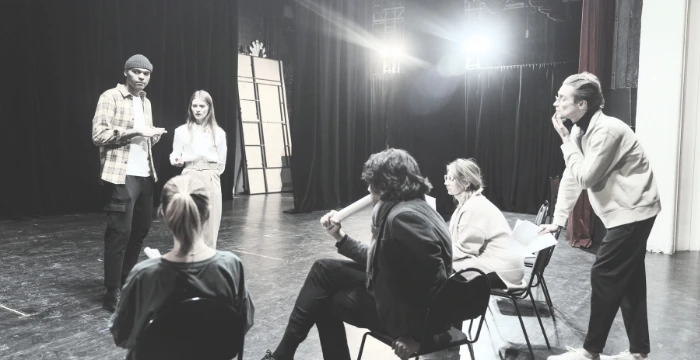
Frame.Freeze.Theatre
Ricardo Magno · Theatre Artist & Faculty, University of Melbourne
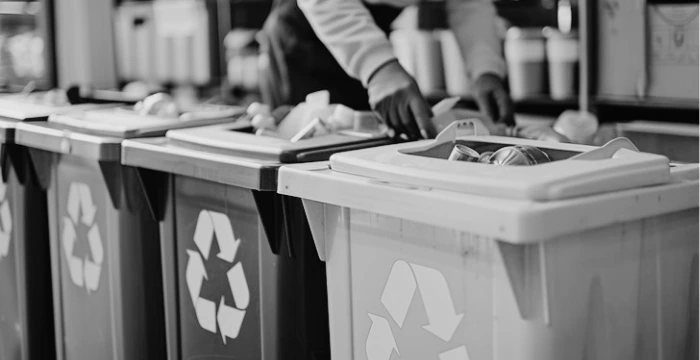
Zero-Waste Packaging
Sahar Mansoor · Founder & CEO, Bare Necessities
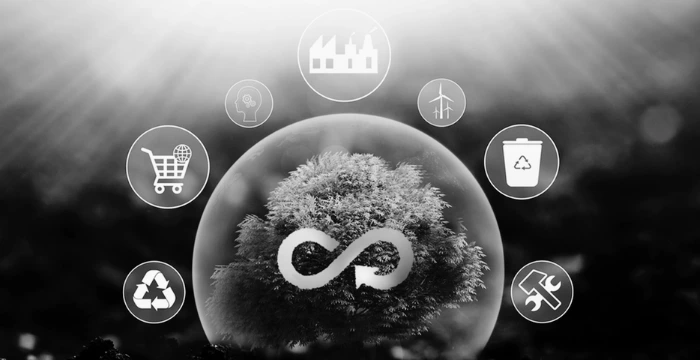
The Afterlife of Stuff
Saloni Goel and Anshuman Singh Sisodia · Co-Anchor, Rooted Cities
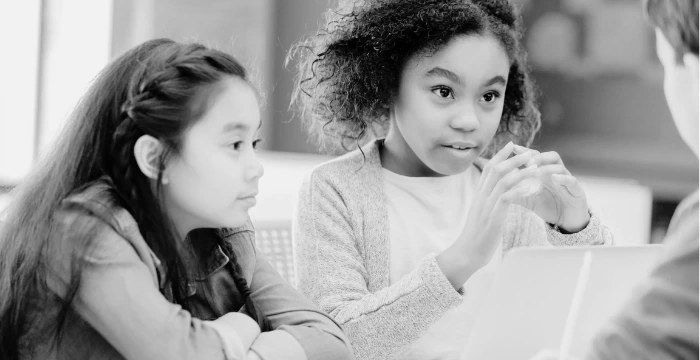
Disagreeing Without Disconnecting
Dr Jui Shankar · Counselling Psychologist · former faculty, Symbiosis International University

Einstein's General Theory of Relativity
Prof. Puragraha GuhaThakurta · Professor of Astronomy & Astrophysics, UC Santa Cruz

Vanished — Who Took Your Post?
Kabir Darshan Singh Chaudhary · Senior Counsel, Wikimedia Foundation

Most students are asked to choose what to study before they've seen what serious work actually looks like.
The Kruu Scholar Program exists to change that. It is a short, intensive experience where students work on real problems using research-driven methods which is guided by mentors who have spent decades doing this work professionally.
"It was something out of the bookish world. A very delightful experience that allowed us to indulge in the world of research and creativity."
Devansh Ray Chaudhuri · Delhi Public School, NerulNo grades. No prizes. No syllabus to memorise. Just the discipline of actual thinking by framing questions, weighing evidence and building something real.
Not a competition. Not a certificate course. A disciplined rehearsal space for the kind of thinking universities expect and schools rarely train.
The four-milestone architecture
Conceptual Grounding
Encounter real-world complexity. Formulate a scoped and investigable research question. Investigation cannot begin until inquiry is disciplined.
Structured Investigation
Document sources. Justify credibility. Acknowledge bias. Build a CEIL analytical draft: Claim → Evidence → Interpretation → Limitation.
Design & Synthesis
Translate evidence into a defensible solution. Trade-off evaluation. Stakeholder analysis. Analytical depth over aesthetic polish.
Reflection & Integration
Epistemic reconstruction is not a summary. Initial assumption. Evidence encountered. Cognitive shift. Remaining uncertainty. What comes next.
Six projects. Four tracks. One cohort.
Six mentors across four tracks: a theatre professional, a zero-waste entrepreneur, a youth-development anchor, a counselling psychologist, an astrophysicist and a technology lawyer, from across the world. Not recorded lectures. Real engagement for the full four weeks.
Frame.Freeze.Theatre
Ricardo Magno · Theatre Artist & Faculty, University of Melbourne
Middle school is a period of rapid emotional, social and academic transitions: bodies, friendships and sense of self, all changing at once. Students become researchers and storytellers of the emotional lives happening around them, shaping real observations into narrative art: drama as a mirror (to see and name emotions) and a lab (to practise managing them).
Students learn to identify emotions like stress, anxiety and frustration through theatre practices, listen with empathy to fellow middle schoolers' stories, and translate human experiences into creative performances.
→ A recorded performance built from peer research — or a 6-freeze-frame visual story capturing the journey from emotional stress to self-regulation
Masterclass: September 13, 5 PM to 6 PM
Zero-Waste Packaging
Sahar Mansoor · Founder & CEO, Bare Necessities
Waste is shaped by what we buy, how products are packaged and what we discard. Global municipal waste is projected to reach 3.8 billion tonnes annually by 2050. Students track their home's waste for 7 days across food, personal care, clothing and other categories, and explore how one practical change can create a more sustainable household system.
Students learn how everyday consumption creates different types of waste, conduct a household waste survey and recognise patterns, and apply the 3R principle (Reduce, Reuse/Repair, Recycle).
→ A Zero-Waste packaging solution, created and showcased to ensure zero waste in one category of the student's choice
Masterclass: September 10, 6 PM to 7 PM
The Afterlife of Stuff
Saloni Goel and Anshuman Singh Sisodia · Co - Anchor, Rooted Cities
A water bottle takes almost three times more water to make than it holds, then sits unchanged in a landfill for hundreds of years. Students pick one everyday item (denim jeans, shampoo bottle, toothbrush), study its hidden journey, and use circular-economy thinking to brainstorm new pathways for it: reused, fixed, or recycled instead of thrown away.
Students learn to understand a product's life cycle as a connected system, apply circular economy thinking to real alternatives, and communicate research through visual storytelling.
→ A two-part comic book: the object's wasteful journey (made → used → trashed) and its reimagined circular journey — told in the object's own voice
Masterclass: September 12, 7 PM to 8 PM
Disagreeing Without Disconnecting
Dr Jui Shankar · Counselling Psychologist · former faculty, Symbiosis International University
Disagreements are a natural part of relationships with family, friends, teachers and communities. Instead of seeing conflict only as a problem, students explore how it can become an opportunity for learning, growth and stronger relationships, using Nonviolent Communication (NVC) in one real, safe disagreement and reflecting on what changed.
Students learn to recognise common patterns of disagreement, understand how feelings, needs and communication affect conflict, and listen to different perspectives without assuming disagreement means disrespect.
→ A six-slide social-media carousel: an original meme capturing the chosen conflict, then the patterns noticed, the NVC approach used, and the potential resolution
Masterclass: September 12, 5:30 PM to 6:30 PM
Einstein's General Theory of Relativity
Prof. Puragraha GuhaThakurta · Professor of Astronomy & Astrophysics, UC Santa Cruz
For centuries, we viewed gravity as a mysterious force pulling objects together. Einstein suggested it isn't a 'pull,' but a curve in the fabric of the universe itself. Through classic and modern experiments, students bridge the gap between Galileo's observations on Earth and Einstein's revolutionary theory, exploring how mass bends light across the cosmic stage.
Students learn the Equivalence Principle, spacetime curvature and geodesics, gravitational lensing, and empirical analysis — recording, reporting and interpreting data from physical trials.
→ An Experimental Research Report (hypotheses, data tables, angle measurements, conclusions) + a 500-word Synthesis & Reflection Essay tracing the evolution from Galileo's gravity to Einstein's
Masterclass: September 10, 7:30 PM to 8:30 PM
Vanished: Who took your post?
Kabir Darshan Singh Chaudhary · Senior Counsel, Wikimedia Foundation
Something you posted is gone, and nobody will tell you why. In one six-month stretch, government agencies in India alone sent X more than 29,000 takedown requests — and X removed over 26,000 of them. Almost nobody who loses a post ever finds out who took it: software, a company rule, or a government office that asked quietly. Students learn to tell those apart, and what to ask of each.
Students learn who actually decided — software, a company rule or a government order, each needing a different remedy — and that asking questions of platforms and governments is an ordinary skill of citizenship.
→ A clickable prototype that walks someone from 'my post is gone' to their real next step: what happened, saving the evidence, complaining to the platform, and where else to turn
Masterclass: September 11, 6 PM to 7 PM
Mentored by Real Professionals
Six mentors across four tracks: a theatre professional, a zero-waste entrepreneur, a youth-development anchor, a counselling psychologist, an astrophysicist and a technology lawyer, from across the world. Not recorded lectures. Real engagement for the full four weeks.
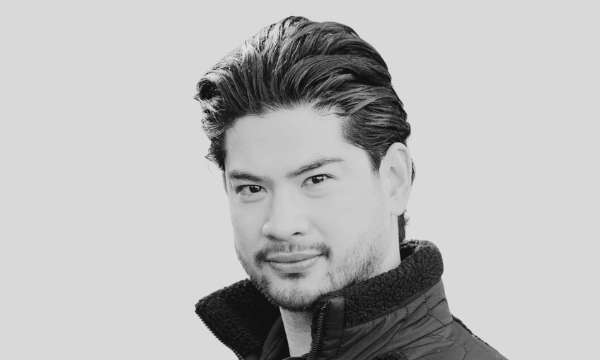
Ricardo Magno
Theatre Artist & Faculty, University of Melbourne
Theatre director, actor, choreographer and educator. He holds a Master's in Theatre Directing from the University of Melbourne, where he received the Barbara Manning Award for Drama, and teaches acting at the Victorian College of the Arts. A recipient of the 2025 Palanca Award for Literature — often regarded as the 'Pulitzer of the Philippines' — his work has featured at international theatre festivals across Spain, Japan, Taiwan, Indonesia, Malaysia, Thailand and the United States.
Frame.Freeze.Theatre
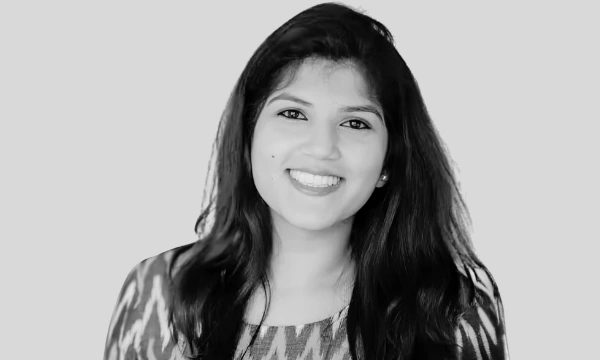
Sahar Mansoor
Founder & CEO, Bare Necessities
Founder & CEO of Bare Necessities, a hub for zero-waste living in India — all the trash she has produced in four years fits in a 500-gram jar. A University of Cambridge alumna in environmental policy who formerly worked at the WHO in Geneva, she has been recognised by Google India as 'Most Inspiring Indian of the Year' and by NDTV as a 'Swachh Warrior', trained as a Climate Reality Leader under Al Gore, and is a Global Shaper at the World Economic Forum.
Zero-Waste Packaging
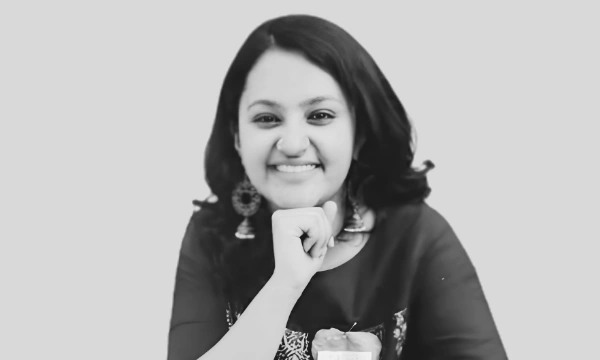
Saloni Goel
Co-Anchor, Rooted Cities
A Young India Fellow (Class of 2020) and Economics graduate from Indraprastha College for Women, University of Delhi. Her career spans education, community engagement and innovation — leading international partnerships, co-founding a COVID-19 relief initiative, and working across volunteer engagement, fundraising, CSR, communications and research.
The Afterlife of Stuff
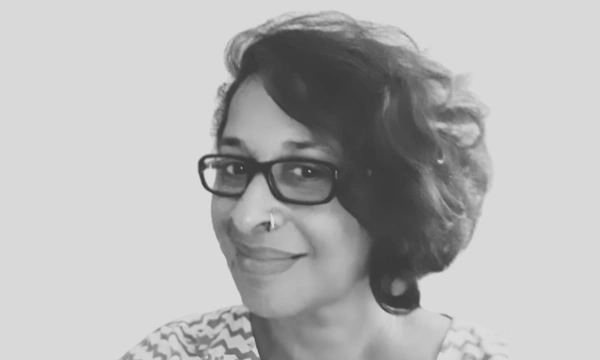
Dr Jui Shankar
Counselling Psychologist · former faculty, Symbiosis International University
Counselling psychologist, therapist, educator and clinical supervisor with over 20 years across mental health, higher education and humanitarian work — including Médecins Sans Frontières missions in Papua New Guinea and Iraq. She holds a Doctorate in Counseling Psychology from Ball State University, USA, specialising in peacebuilding and social justice.
Disagreeing Without Disconnecting
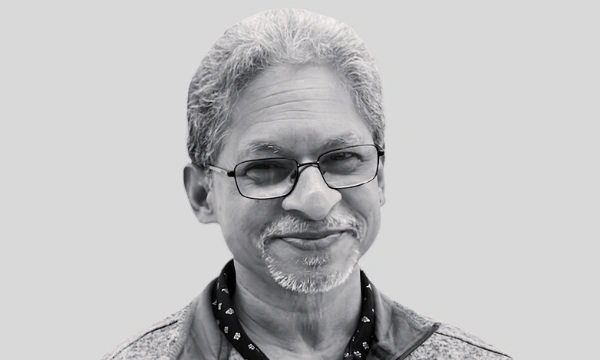
Prof. Puragraha GuhaThakurta
Professor of Astronomy & Astrophysics, UC Santa Cruz
Internationally recognised astrophysicist researching galaxy formation, stellar halos, galactic archaeology and dark matter using the Hubble Space Telescope, James Webb Space Telescope and Keck Observatory. Founder of CrEST (Creating Equity in STEAM) and the Science Internship Program, he is a Fellow of the American Astronomical Society (2021) and winner of the AAS Education Prize (2025).
Einstein's General Theory of Relativity

Kabir Darshan Singh Chaudhary
Senior Counsel, Wikimedia Foundation
Technology lawyer at the nonprofit behind Wikipedia, with nearly a decade in technology law and policy — previously at Trilegal and Nishith Desai Associates. His practice covers content moderation, data privacy, digital identity and open-source governance; he is licensed to practise in India and New York and holds CIPP/US and CIPP/E certifications.
Vanished — Who Took Your Post?
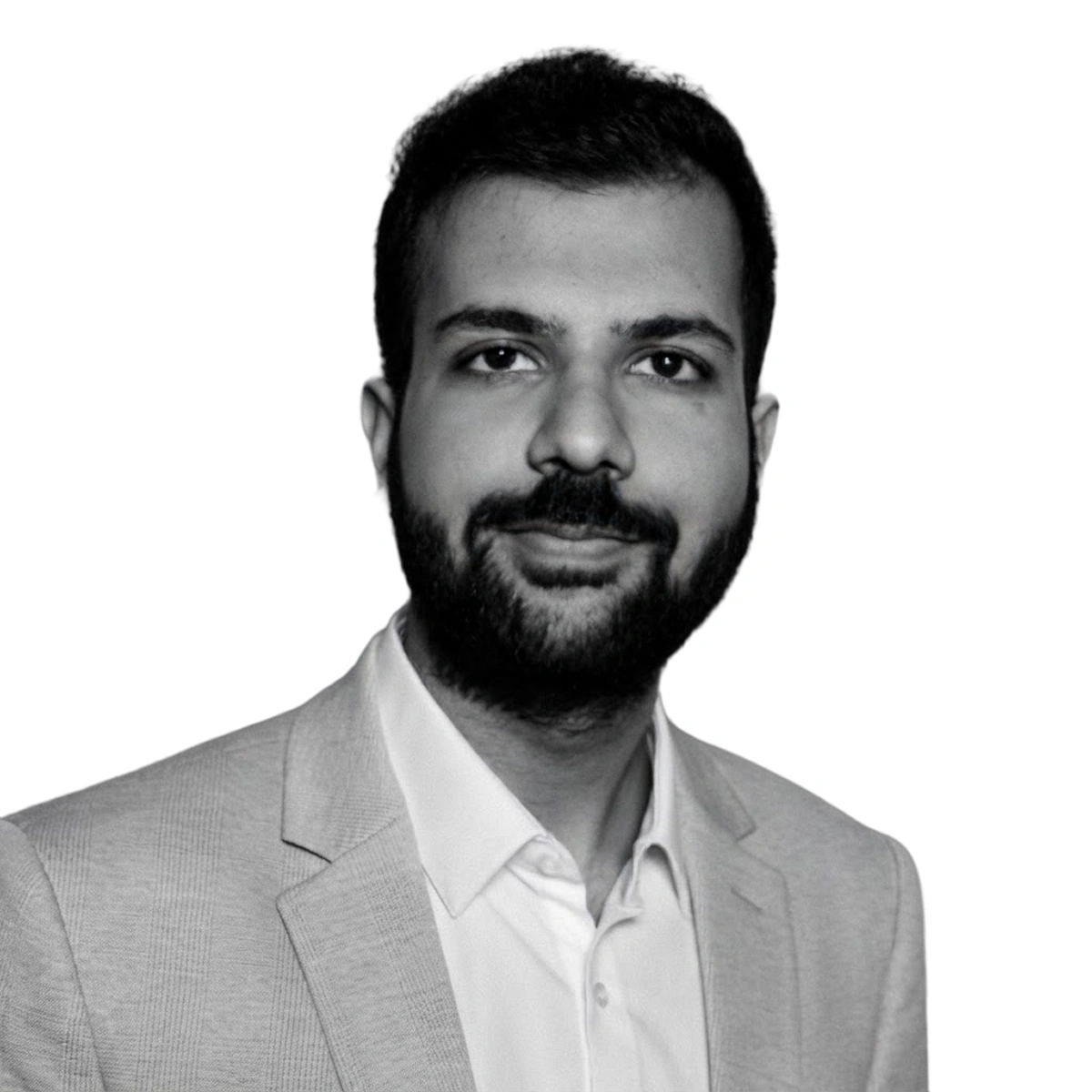
Anshuman Sisodia
Co-Anchor, Rooted Cities
A corporate sustainability professional specialising in the circular economy, with experience spanning climate literacy, ESG advisory and commercial strategy across organisations including Schneider Electric, Saint-Gobain and Mentora Institute. A certified Climate Fresk facilitator with a sustainability qualification from ESSEC Business School, France as he finds his work most fulfilling when building climate literacy and future-thinking among young people by helping them see themselves as active participants in shaping what comes next.
The Afterlife of Stuff
From Brief to Real Showcase
Kick-off lectures begin in September. From there, students enter a structured four-week journey with no exams and no grades — focused entirely on intellectual depth and research-led problem solving.
No shortcuts. No templates. Every phase builds the epistemic foundation for the next.
Key Dates · SEPTEMBER 2026
Foundation & Framing
Week 1
Understanding the context, framing disciplined research questions and establishing the framework for exploration with expert kick-off lectures. Investigation cannot begin until inquiry is sharp.
Exploration & Iteration
Week 2
Diving deep into solutions, building and testing hypotheses against real-world data and gathering feedback. Students document sources, justify credibility and acknowledge limitations honestly.
Synthesis & Deep Dive
Week 3
Compiling findings, synthesising results using a clear research methodology and refining work with mentor guidance. Trade-off evaluation and stakeholder analysis are non-negotiable.
Final Presentation & Reflection
Week 4
Presenting completed work to mentors and peers. Epistemic reconstruction is not a summary. What assumption changed, what evidence shifted the thinking, what uncertainty remains and what comes next.
School Onboarding in Three Steps
Admission is based on intent and engagement but not on academic rank. Students must be nominated by their school. Cohort size is limited. Schools that have enrolled before consistently re-enrol.
School Nomination
Schools identify motivated students from Grades 6–12. We look for curiosity and intent but not grades or rank. One email to our team is all it takes to get started.
Student Application
Shortlisted students submit a short intent form describing what they want to investigate and why. No essays. No prior experience required. Just a genuine question they want to chase.
Final Selection & Showcase
Cohorts are finalised based on curiosity, intent and balance across the six projects. Completed projects are published to student portfolios and presented at the final showcase.
Designed to reinforce what IB, Cambridge & NEP 2020 already require
Kruu Scholars does not replace formal curricula. It strengthens the intellectual architecture those frameworks describe by providing the enforcement mechanism that policy aspiration alone cannot deliver.
IB Alignment
ATL Thinking & Research Skills · Internal Assessment structure · Academic Honesty standards · Approaches to Learning · Extended Essay preparation · Learner Profile development
Cambridge Alignment
Learner Attributes: Confident, Reflective, Innovative, Responsible, Engaged · Coursework inquiry structure · Evidence synthesis · Global Perspectives methodology
NEP 2020 Alignment
Experiential learning mandate · Competency-based education · Scientific temper · Critical thinking · Multidisciplinary integration · Problem-solving orientation · Holistic development
What School Leaders Say About Kruu
"Our school believes that students should be developed holistically and the school should provide ample opportunities to develop their personality. Platforms like Kruu make students think out of the box and challenge them. During the project, each student learns collaboration, communication, confidence and understanding others perspectives by skills that lead to our core values of empathy and respect."
Dr. Harsha Alles
Chairman, The Gateway Group of Schools, Sri Lanka
"Kruu connects school students with industry and corporate experts, bridging the academic-professional divide. Its dynamic, engaging approach fosters critical thinking, communication and confidence by skills that go well beyond traditional academics and prepare students for the realities of the world beyond school."
Mr. Jacob
Principal, Olive International School
The proof is in the work.
A quick look at what students built in past cohorts — real projects, real names, real schools. View the full impact report →
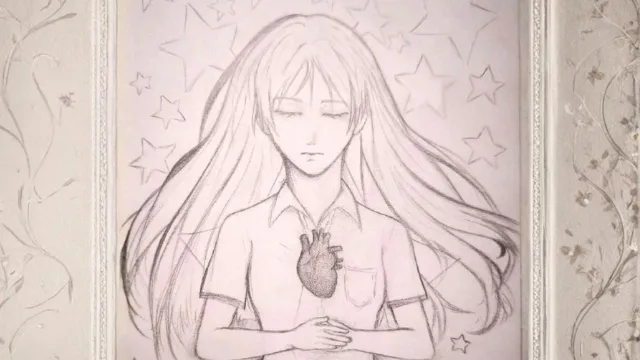
Your Story, Your Voice
Lin Hanyue · Singapore Intercultural School
An illustrated story, 'The Heart of a Decaying Star,' exploring academic pressure, burnout and self-worth through the journey of an overachiever who learns that worth isn't defined by work alone.
Singapore Intercultural School · Past Cohort

BrandSpark: The Youth Marketing Challenge
Azim Hakim · Bombay Scottish School, Mahim
A complete marketing campaign — Instagram Reels, posters, WhatsApp marketing — built to give a local Mumbai cricket-equipment store its brand identity.
Bombay Scottish School, Mahim · Past Cohort
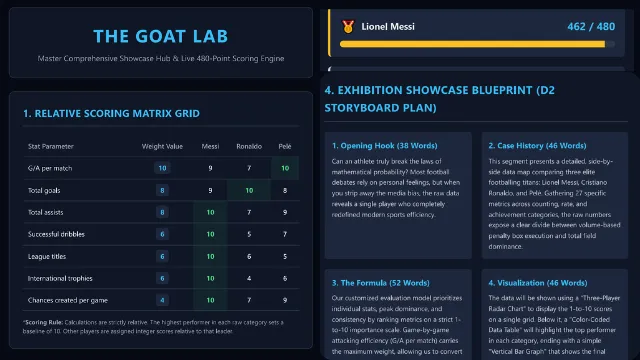
The GOAT LAB! Cracking Sports with Data
Devansh Ray Chaudhuri · Delhi Public School, Nerul, Navi Mumbai
A weighted analytics engine comparing Messi, Ronaldo and Pelé across seven metrics; verdict — Messi, 462/480.
Delhi Public School, Nerul, Navi Mumbai · Past Cohort
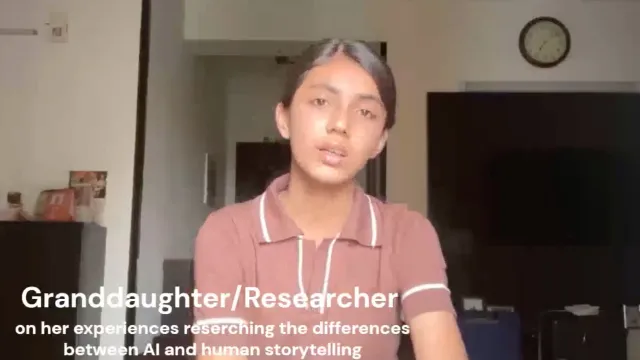
My Grandma Can't Get Automated: Storytelling Using AI
Ankana Bose · Bombay Scottish School, Powai
A documentary using AI as a research collaborator to capture her grandfather's 1974 border-escape story — and proving what AI can never replicate.
Bombay Scottish School, Powai · Past Cohort
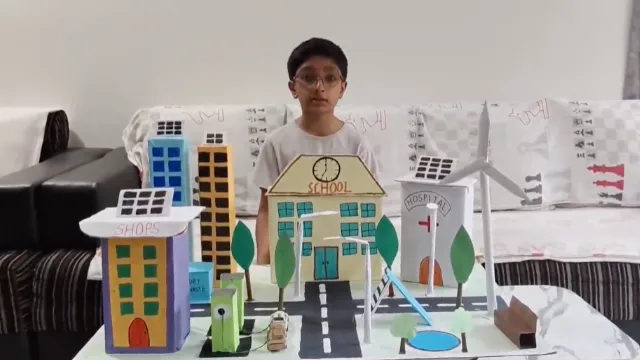
The 15-Minute City
Anay Lokesh Auti · Delhi Public School, Nerul, Navi Mumbai
A working physical model of a city where every daily need — work, healthcare, education — is 15 minutes away.
Delhi Public School, Nerul, Navi Mumbai · Past Cohort
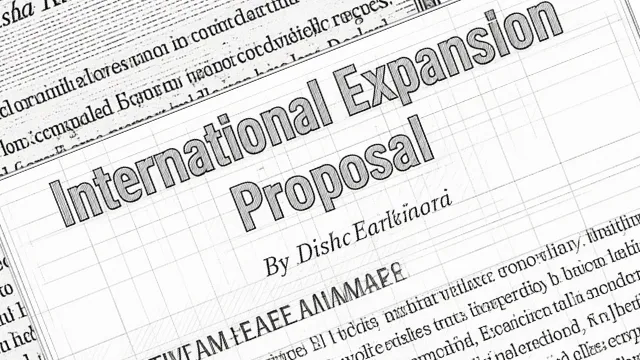
Going Global: Building an International Business
Disha Harkhani · NES International School
An India–UAE CEPA-based expansion plan taking a domestic textile manufacturer into Dubai's premium apparel market.
NES International School · Past Cohort
It was something out of the bookish world that average students know — a very delightful experience by allowing us to indulge in the world of research and creativity.
Devansh Ray Chaudhuri
DPS Navi Mumbai
Mentors and lecturers were really helpful. The project was practical and very relevant to our career prospects. Allowed for lots of independence and free thinking. Really good — something that will be remembered.
Shyam Anand
Kanakia International School
The experience was really good and was a step-by-step path explained clearly. The project helped me learn new skills — including how to manage time.
Vihaan Voshal Rajput
Bombay Scottish School, Powai
I loved connecting a massive topic like automation with my father's personal journey. Learning to use AI tools while keeping my own voice and the film's heart alive was an amazing challenge.
Ananya Soni
The Sanskaar Valley School
I enjoyed working on a real-world business project because it allowed me to apply creativity, research, and problem-solving skills practically. I especially liked designing the marketing campaign and learning how businesses promote their products to different audiences.
Rehan
DCM Group of Schools
Bring Real Work to Your School
Join schools across India, Sri Lanka and Singapore delivering experiential learning that actually changes how students think. September cohort seats are limited.
Step 01
School Nomination
Schools identify motivated students from Grades 6–12. Curiosity matters more than grades or rank.
Step 02
Student Application
Shortlisted students submit a short intent form describing what they want to investigate and why.
Step 03
Final Selection
Cohorts are finalised based on curiosity, intent and balance across the six projects.
100% Scholarship · 4 Weeks · Grades 6–12 · Fully Online · Starting September, 2026